
Grape Vermouth
Vermouth is more involved than amaro. It’s essentially a base wine fortified with a high-alcohol tincture, the wine can be purchased but to fully make it from scratch the first step is fermenting some form of sugar. Grapes are traditional, but other sugar sources like honey, apples, or even just straight sugar can work.
I need to write up the first time I made vermouth this past summer, but the headline was that batch was basically an accident. I had a fermented wine that had been sitting unused for a few years that I intended to experiment with adding tinctures to, but when I pulled some to start sampling I discovered time had been kind to it and committed to a full batch.
This new batch is a more intentional fermentation using grape-infused honey to create an initial honey wine base, which I’ll later fortify with a steeped tincture.
Base
- 3.5L water
- ~1.5kg honey
- 360g concord grapes
- 200g refined cane sugar
- EC-1118 champagne yeast
- pectic enzyme
- Fermaid-K
- Diammonium phosphate
Aromatics
- tbd!
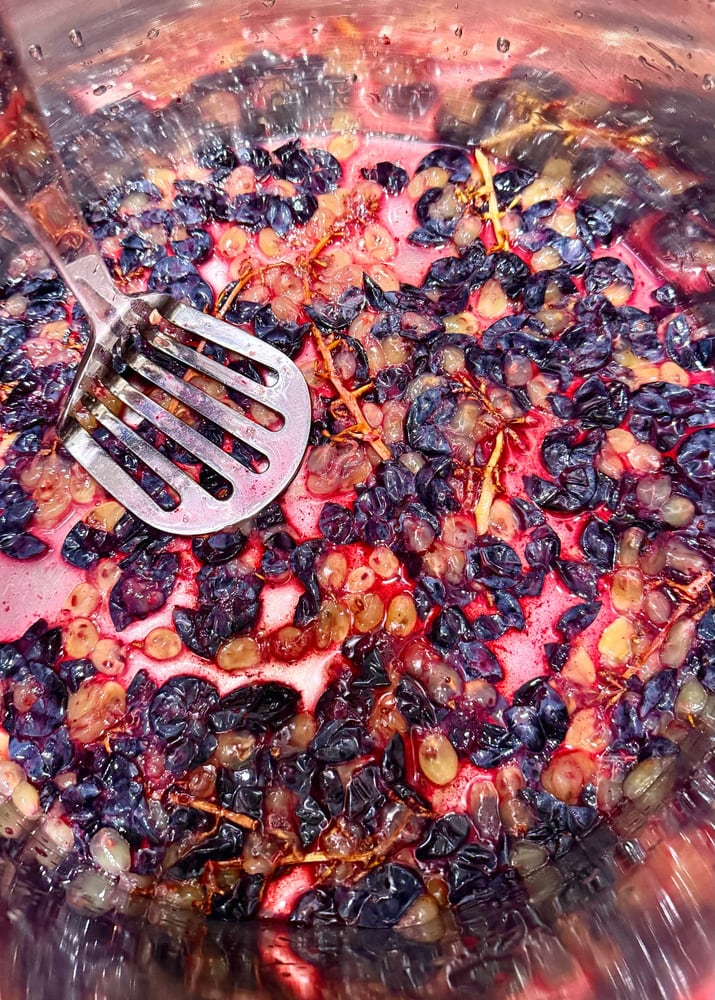
The first step in this batch was crushing the grapes to a base must and pouring on honey dissolved in warm water. I’ll leave fermentation details for a future process write-up, but in broad strokes: I aerated the must well, rehydrated wine yeast and added along with pectic enzyme, then at 24hr intervals for the first three days I added equal portions of Fermaid-K and diammonium phosphate to provide critical nutrients during early fermentation. Due to cooler fall temperatures I let this ferment at room temperature near an outside door to roughly regulate at slightly lower than ambient.
At the three week mark it had reached around 12% ABV with some sugar left. I expect the base wine to reach around 14%, though it’s the first alcoholic ferment I’ve done in many years so we’ll see what actually shakes out. I transferred it a bit shy of terminal gravity so the yeast can still work for a few days and scrub the oxygen it picks up on transfer, more of a problem with the smaller batches. Since I left behind the main yeast cake, whatever is in solution will have to continue the ferment albeit slower. Could take 2-3 months to fully stablize.
Once I have a feel for the base wine, I’ll design the botanical addition around flavours that accent and add depth.
With each batch, I keep aside a small bottle that I can sample from over time and keep the notes here updated as it develops. More when available.