
Split tests – time
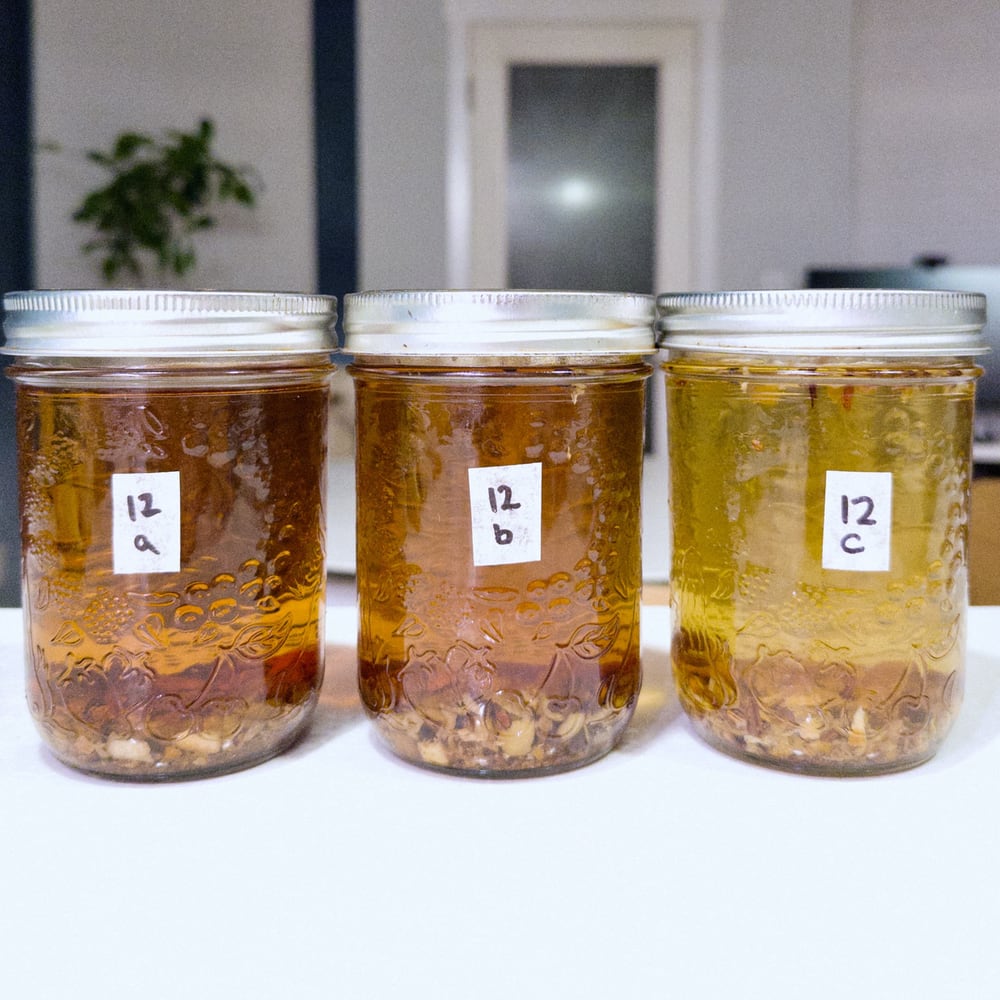
My first batch of amaro was a random recipe I found online that I changed almost completely. I didn’t have a clue what I was doing and figured I probably screwed it up, I hated it for months but then it turned around into something that seemed kinda… good?
I opened my last bottle around the time I was thinking about doing some process tests, so I made the same recipe again (with added lemon peel) to run the same base recipe through four different processes and build a better understanding of how time of additions and ageing affects flavour development.
Recipe
- 375mL 50% vodka
- 175g water
- 125g refined cane sugar
Long steep:
- 2.5 grams sweet orange peel
- 2.5 grams lemon peel
- 1.5g star anise
- 1g cassia
- 0.25g clove
- 0.25g cardamom
- 0.25g timut peppercorn
- 0.15g cubeb
- 0.15g grains of paradise
Short steep:
- 2 grams gentian root
- 0.5g coffee
- 0.25g birch bark
Using my base process as a guide, these batches differ on how long the ingredients are infused, and how long they’ll be aged.
-
Batch A – Made with the same long process I’ve been using for most batches. Both long and short steep ingredients went in at together at the start of the steep for two weeks. This batch will age for 6 months before sampling.
-
Batch B – The long steep ingredients went in at two weeks, and the short steep ingredients were added four days before straining. The hunch this one tests is that more desirable compounds may come out in the long steep and the short steep could prevent overly harsh bitterness. This batch will age for 6 months too.
-
Batch C – Made with my newer quick process, the long steep ingredients went in for 48 hours and the short steep had 24 hours before finishing. This batch will also age for 6 months.
-
Batch D – Not yet made, the intent is an identical batch to C that will be made fresh for tasting. The hunch this one will test is that the quick batches may fall off faster due to less extraction and should be made for fresh consumption.
And now to wait. These will be ready some time in early 2027, when I’ll blind taste them side by side and write up impressions. My thought going into this is that the short process leaves a lot of compounds behind that the long process will extract through the extra contact time, but whether those are desirable or not is anyone’s guess. If I had to bet I’d say there will be more depth and complexity in the long process due to better extraction – but I also would have expected Batch A to be the harshest when young but it came out the most immediately drinkable of the three, so it’s just a guess.
With each batch, I keep aside a small bottle that I can sample from over time and keep the notes here updated as it develops. More when available.