
Spring Blossom Amaro
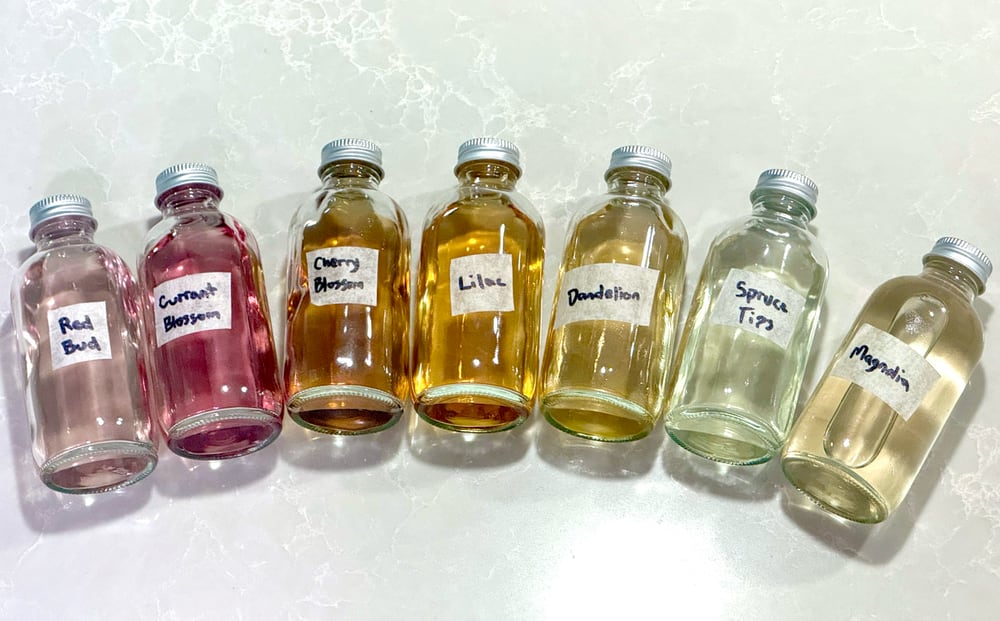
With the abundance of edible springtime flowers and blossoms around town, I thought it might be worth harvesting and making tinctures out of as many as I could find. After making a simple base amaro using my standard process, I sampled each tincture against the base and took notes on flavours that informed the final blends.
Base
- 500mL 50% vodka
- 250g water
- 150g refined cane sugar
Aromatics
- 10g sweet orange peel
- 5g coriander
- 5g juniper
- 2g lavender
- 2g horehound
- 2g oak
- 1g fennel seed
- 1g elderflower
- 1g cinchona bark
- 1g wormwood
- 0.5g cinnamon
In a blending session I mixed the base infusion with some simple syrup and each tincture one by one. I took notes on flavours and how they might work in the final mix:
- Cherry blossoms – very aromatic and taste unmistakably comes through. Use sparingly.
- Currant blossoms – adds some not distinctively currant candy berry flavour that rounds out harsher notes well.
- Dandelion flowers – sarsaparilla candy! Neat.
- Fir tips – slightly mutes the piney juniper into a more mellow evergreen, not hugely present on its own. Good accent though.
- Lilac flowers – a bit of stewed flower, sarsaparilla with a bit of rose.
- Magnolia blossoms – wasn’t happy with the tincture so made a syrup instead. Mostly adds sweetness, but mellower than pure sugar.
- Red bud blossoms – a little perceptually sweeter aroma, rounded flavour with a hint of peaty vegetal notes.
- Spruce tips – there on the nose but subtler taste, citrusy bubblegum cola notes that works well against the juniper.
In the end I decided to split the batch two ways and bottle separately to try and bring out separate notes.
Batch 1
Leaning more toward evergreen and starting with a 205g pour of the base infusion, this was a blend of 60g magnolia syrup, 45g each fir and spruce tinctures, 35g currant, and 25g dandelion.
Batch 2
More blossom-forward, this was also a 205g base infusion starting point with 25g each red bud, lilac, dandelion, magnolia syrup, and cherry blossom with 12g fir tip and currant.
These batches are 4 months into ageing, so should be ready in November.